
Fig Leaves and Shame: What Eve’s Story Reveals About Identity and Grace
Adam and Eve hid behind fig leaves, just like we do. Discover how God responds to shame with pursuit, covering, and grace.
WOMEN OF THE BIBLE
1/20/20262 min read
The First “Cover-Up” Wasn’t About Leaves, It Was About Shame
Before sin entered the story, Genesis describes a breathtaking freedom: “They were both naked and were not ashamed.” (Genesis 2:25)
After disobedience, everything changes: “They sewed fig leaves together and made themselves loincloths.” (Genesis 3:7)
The first human reflex wasn’t just guilt—it was hiding.
And we still do it:
overworking to feel worthy
pretending we’re fine
polishing our image
avoiding prayer because we feel unclean
Fig leaves didn’t start in a garden. They started in a heart that suddenly believed, “I can’t be seen like this.”
God’s First Move: Pursuit
This part of Genesis is easy to miss: God comes walking in the garden, and He calls out, “Where are you?” (Genesis 3:8–9)
That’s not the voice of a God eager to shame you. That’s the voice of a Father seeking His children.
Even when we run, God moves toward us.
If you’re building a rhythm of Scripture-based reflection (and you want devotionals that make Bible women feel real and relatable), this is a great spot to explore your next read:
“Women of the Bible” book (buy here)
The Difference Between Conviction and Condemnation
Conviction draws you back to God. Condemnation pushes you away.
Scripture later echoes this: “There is therefore now no condemnation for those who are in Christ Jesus.” (Romans 8:1)
Genesis 3 shows consequences, yes—but also relationship. God speaks. God searches. God covers.
The Most Tender Verse in Eden
“The LORD God made for Adam and for his wife garments of skins and clothed them.” (Genesis 3:21)
Read that slowly.
They tried to cover themselves with flimsy leaves. God replaced it with something stronger. It’s a picture: our self-made righteousness is never enough, but God’s covering is.
This is grace—appearing early, even before the Bible uses the word “grace.”
What Eve Teaches Us About Identity
Our culture labels people by their worst moment. Scripture doesn’t.
Eve is called “the mother of all living” (Genesis 3:20). Even after failure, God’s story for her includes future, life, and purpose. Your worst chapter is not your final identity.
A Prayer for Anyone Wearing Fig Leaves
“God, I’ve been hiding. I’m tired. Help me come into Your light again. Cover what I can’t fix. Heal what shame has fractured. Teach me who I am in You. Amen.”
If you’re building a rhythm of Scripture-based reflection (and you want devotionals that make Bible women feel real and relatable), this is a great spot to explore your next read:
“Women of the Bible” book (buy here)

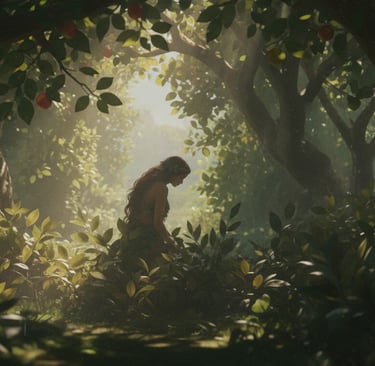
Are you still hiding?

Connect
Join our community for daily spiritual growth.
Contact
Subscribe
© 2026. All rights reserved.